

India has seen a dramatic change in how people view investments and lifestyle options recently. The majority of Indians have historically favored fixed deposits, gold, or urban real estate as investment options. The fact that eco-conscious Indians who are looking for more than just financial gains are primarily driving this trend adds to its interest. They are looking for investments that support their beliefs in environmental stewardship, wellness, and sustainability.
The Rise of Conscious Investing in India
In India's cities, the idea of "conscious living" has gained popularity, especially among Gen Z and millennial workers. Many investors are reconsidering their priorities in light of the growing awareness of issues like food security, deforestation, and climate change. Farmland is no longer only seen as an asset class; it is now seen as a means of fostering a relationship with nature and making a constructive contribution to the planet.
In addition to increasing in value, this investment encourages green cover, supports sustainable farming methods, and offers healthier food options.
For Indians who care about the environment, it's an opportunity to earn money while doing good.
Why Eco-Conscious Indians Are Choosing Managed Farmland
1. A Greener Alternative to Urban Real Estate
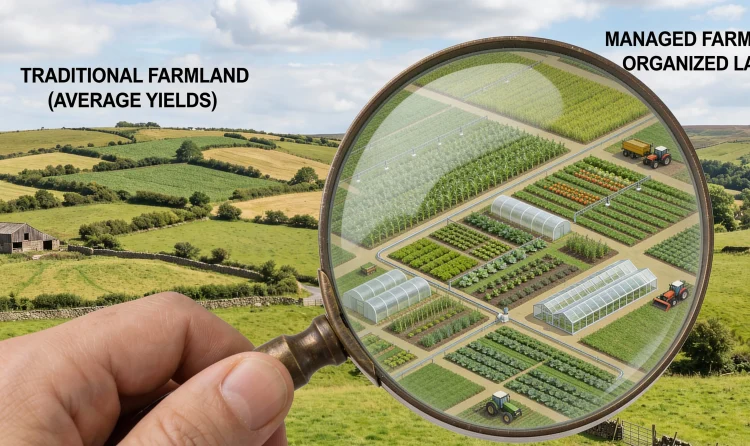
Managed farmland supports ecological health and biodiversity, in contrast to residential or commercial structures that frequently exacerbate urban sprawl and environmental stress. Every acre kept up with agroforestry or organic farming promotes carbon sequestration, groundwater recharge, and soil fertility.
For environmentally conscious Indians, this is an investment that replenishes rather than depletes the planet.
2. Sustainable Food Security
Urban families are becoming more concerned about fruits and vegetables that contain pesticides. This not only lessens reliance on food produced with chemicals, but it also fosters a sense of food security during unpredictable times.
3. Combining Returns with Responsibility
Even though the value of farmland increases gradually over time, environmentally conscious investors are just as driven by the intangible benefits of better soil health, cleaner air, and a sustainable legacy. Managed farmland is a genuinely "guilt-free" investment because it combines social responsibility with wealth creation.
4. An Escape from City Chaos
Many people view managed farmland as a way to improve their lifestyle in addition to an investment. Farm stays, meditation spaces, and nature trails on managed farmlands are growing in popularity as environmentally conscious urbanites seek balance in their busy lives.
5. Contribution to Climate Action
By encouraging regenerative agriculture, natural farming, and tree plantings, every acre of managed farmland helps to lower carbon footprints. Eco-aware investors align their financial choices with their environmental values, viewing this as their own way of supporting India's climate action goals.
6. Community and Cultural Connection
Farmland investments frequently foster a sense of belonging among environmentally conscious people. For environmentally conscious Indians, owning managed farmland means more than just making money; it means becoming a part of a movement that promotes sustainable living, cultural heritage, and traditional farming knowledge.
The Changing Mindset of Indian Investors
This mentality change was sped up by the COVID-19 pandemic. The value of clean food, self-sufficient living, and green spaces became more apparent as people spent more time indoors. A lot of environmentally conscious professionals started to view farmland as a future safety net as well as an investment.
Major cities like Bengaluru, Hyderabad, and Pune are only a few hours' drive away from farmland, so investors can easily access their property, enjoy its produce, and still pursue their urban careers. Managed farmland has become particularly attractive due to its dual benefits of financial growth and lifestyle enrichment.
Indians who care about the environment are changing the nation's investment narrative. Their wealth is being planted in fertile soil, which produces not only crops but also cleaner air, healthier food, and long-term ecological balance, rather than being poured into concrete jungles. Managed farmland represents prosperity with a purpose—a win-win for the investor and the environment in a world where the need for responsible living is growing.